
ADR transport: the transport of hazardous substances
Hazardous substances are also referred to as ADR goods. ADR stands for "Accord européen relatif au transport international de marchandises Dangereuses par Route" (European Agreement concerning the International Carriage of Dangerous Goods by Road) and therefore relates to the international transport of hazardous substances. Transporting these substances, for example from a supplier to a customer, is a separate discipline within the transport world. Special laws and guidelines apply to the transport of ADR goods to ensure that transport is as safe as possible, including the requirement that truck drivers must hold certain certificates.
Types of ADR
Not all dangerous substances have the same properties. For this reason, dangerous substances are classified into different ADR hazard classes. These classes group together substances that are similar in terms of their dangerousness and properties:
Class 1: Explosive substances and articles
These are substances and articles that pose a risk of mass explosion. When one of the articles explodes, everything in the vicinity will explode. Examples include fireworks and weapons.
Class 2: Gases
The second class includes gases that are compressed, liquefied, or pressurized. These gases are, for example, flammable, asphyxiating, toxic, oxidizing, or corrosive. Flammable gases can easily catch fire when they come into contact with an ignition source, such as a match, spark, or burning cigarette. Asphyxiating gases cause serious damage to the lungs, resulting in immediate suffocation. An example of an asphyxiating gas is chlorine gas. Toxic gases are gases that can have a lethal effect if inhaled or otherwise enter the body. An example of a toxic gas is carbon monoxide. Oxidizing gases are gases that can cause or promote fire when they come into contact with an oxidizing substance, such as oxygen. Corrosive gases have a corrosive, caustic effect on, for example, the skin. An example of a corrosive gas is hydrogen gas.
Class 3: Flammable liquids
Class three includes all flammable liquids and solids in a molten state with a flash point higher than 60 degrees Celsius. Examples of flammable liquids are gasoline, petroleum, and gas and diesel oil.
Class 4: Flammable substances
Class four is divided into three subclasses:
Class 4.1: Flammable solids
These are solids that can easily ignite, for example through friction. Examples of solid flammable substances are molten sulfur, red phosphorus, and phosphorus sulfides.
Class 4.2: Substances liable to spontaneous combustion
These substances can ignite without an ignition source. This class also includes substances that are susceptible to self-heating. Some substances are so sensitive that they must be transported under water or nitrogen. Phosphorus is an example of a substance that is susceptible to spontaneous combustion.
Class 4.3: Substances that develop flammable gases in contact with water
Certain substances can develop flammable gases when they come into contact with water. These "mixtures" are easily ignited by common ignition sources such as unprotected light bulbs and sparks. When the mixture is ignited, shock waves and large flames can occur.
Class 5: Oxidizing substances and organic peroxides
Oxidizing substances and organic peroxides are not particularly dangerous in themselves, but can cause a dangerous reaction with other substances. Class 5 distinguishes between two types of substances:
Class 5.1: Oxidizing substances
Oxidizing substances are not combustible themselves, but cause or intensify the combustion of other substances. Substances in class 5.1 are also known as "oxygen carriers." The chemically unstable substances in class 5.1 may not be transported unless all necessary measures are taken to prevent these substances from causing dangerous reactions.
Class 5.2: Organic peroxides
Organic peroxides are substances that contain an oxygen component and a combustible component, making them chemically unstable. When these substances decompose, they can cause violent reactions. Decomposition can be caused by heat or friction, for example.
Class 6: Toxic and infectious substances
These substances are divided into toxic and infectious substances:
Class 6.1: Toxic substances
Toxic substances are substances that are known or may be assumed to be harmful to humans even in small quantities, for example through inhalation, absorption through the skin, or ingestion. An example of a toxic substance is a pesticide, such as rat poison.
Class 6.2: Infectious substances
These are substances that are known or may be assumed to cause disease (such as bacteria, viruses, parasites, and fungi) in humans or animals. An example of an infectious substance is the Ebola virus and a vaccine.
Class 7: Radioactive substances
Radioactive substances can emit invisible radiation. The danger of radioactive substances is mainly radiation hazard and contamination hazard. Radioactive substances are used, for example, in radiation and X-ray equipment. An example of this type of substance is uranium.
Class 8: Corrosive substances
Due to their chemical action, corrosive substances can seriously damage the upper layer of the skin or mucous membranes (or other surfaces they come into contact with). An example of a corrosive substance is hydrochloric acid.
Class 9: Miscellaneous dangerous substances and articles
This class includes substances and articles that pose a hazard during transport and do not fall within the other classes. Examples of dangerous substances that fall within class nine are asbestos and lithium batteries.
ADR Transport
In addition to ADR goods having to be correctly labeled and packaged, there are also rules governing their transport. In order to be allowed to transport ADR goods, the means of transport used must comply with strict regulations: if something goes wrong, it can have serious consequences for health or the environment. In the Netherlands, certain ADR vehicles must be inspected regularly by the RDW. See how HST Group can transport your ADR goods.
Certified drivers
The transport of hazardous substances requires specialized drivers who carry out the transport with care. That is why drivers who transport hazardous substances must be in possession of an ADR certificate of professional competence. This certificate is valid for five years and can only be issued by officially recognized ADR training courses. In addition, the driver must carry an ADR kit with all the mandatory equipment.
Requirements for ADR vehicles (only for certain categories)
In addition to the usual requirements that goods vehicles must meet, there are many additional requirements regarding the construction, engine, wiring, and other parts of the vehicle for vehicles used for certain types of ADR transport. For example, an ADR equipment package and two fire extinguishers must be present in the truck transporting ADR substances. In addition, vehicles used for certain types of ADR transport must be inspected annually to verify that they still meet ADR requirements.
Transport of dangerous goods by sea
Dangerous substances transported by sea freight are not referred to as ADR substances, but as IMDG. This stands for International Maritime Dangerous Goods. The IMDG Code contains all provisions relating to the transport of dangerous substances by sea and uses the same classes as ADR substances.
Transport of dangerous goods by air
When transporting dangerous goods by air freight, these substances are also not referred to as ADR substances, but simply as Dangerous Goods. When dangerous goods are transported by air, they must comply with the IATA Dangerous Goods Regulations Code. The IATA organization uses more or less the same hazard classes as those that apply to the transport of ADR goods.
ADR transport at HST Group
Do you want to transport hazardous substances by land, air, or water? Then HST Group can be of service to you. HST Group arranges transport for you, but can also inform you about the packaging requirements and materials for dangerous goods. In addition, HST Group can also store ADR goods under its own management. Request a free, no-obligation quote now to find out what HST Group can do for you when it comes to the transport of hazardous substances and goods.
Hazard classes we do (not) transport
| ADR | Class | Content | Do we transport this? |
|---|---|---|---|
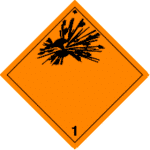
|
Class 1 | Explosive goods and items | |

|
Class 2 | Gasses | |

|
Class 3 | Flammable liquids | |

|
Class 4.1 | Flammable solids | |

|
Class 4.2 | Substances liable to spontaneous combustion | |

|
Class 4.3 | Substances that produce gas with water | |

|
Class 5.1 | Oxidizing substances | |

|
Class 5.2 | Organic peroxides | |

|
Class 6.1 | Poisonous substances | |

|
Class 6.2 | Infectious substances | |

|
Class 7 | Radioactive substances | |

|
Class 8 | Corrosives | |

|
Class 9 | Various hazardous substances and items |